 Pin This
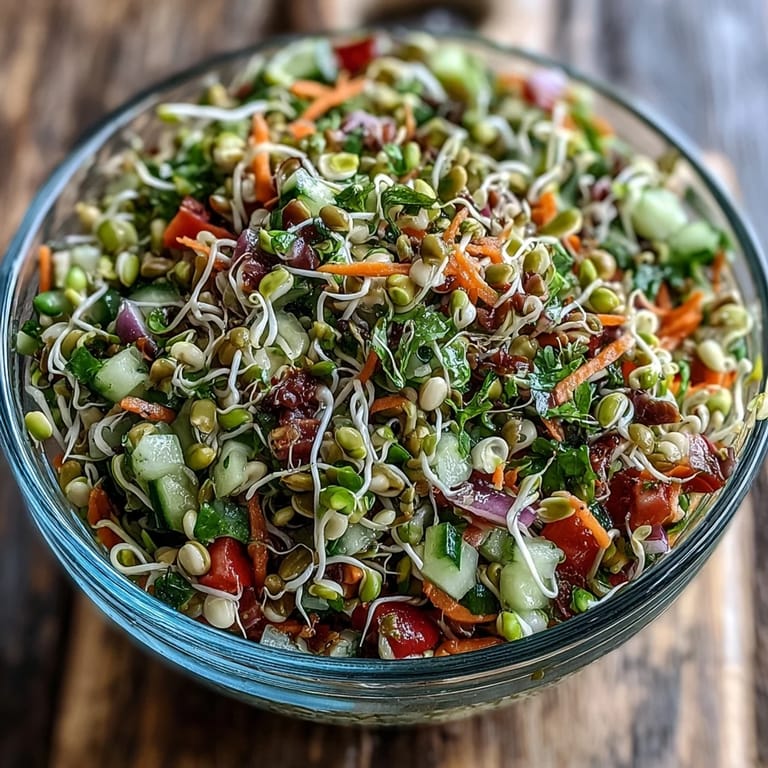
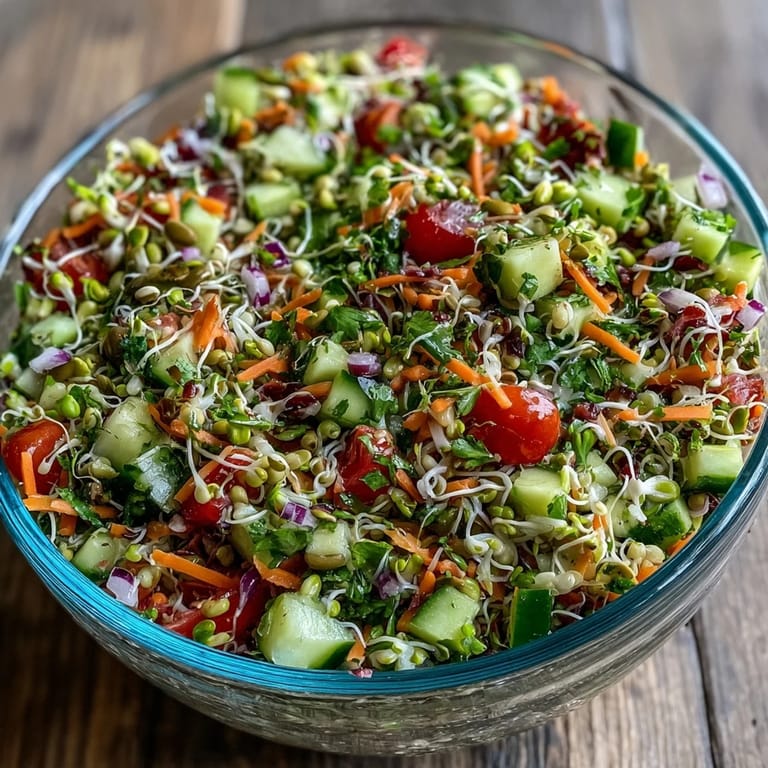
 My neighbor handed me a jar of sprouted mung beans one Tuesday morning, insisting they'd change how I thought about salads. I was skeptical until I bit into one—that crisp, almost grassy freshness woke something up in my kitchen routine. What started as curiosity turned into a weekly ritual of layering sprouts with whatever vegetables looked promising at the market. This salad became my answer to those days when I wanted something alive and bright on the plate, not heavy or complicated.
I served this to my sister during a surprise visit last spring, and she sat at the kitchen counter eating it slowly, commenting on how each vegetable tasted sharper, more itself somehow. That's when I realized the simplicity wasn't a limitation but the whole point—nothing was fighting for attention, just clean flavors building on each other. She asked for the recipe before she left, and now she texts me photos of her versions from her own kitchen in another city.
Ingredients
- Mung bean sprouts: These are your backbone, mild and tender with a subtle nutty undertone that anchors the whole salad without overwhelming the other flavors.
- Alfalfa sprouts: They bring a peppery snap and delicate texture, the ones that look like tiny green wishes when you hold them up to the light.
- Radish sprouts: These pack the real heat, that spicy kick that wakes up your palate and reminds you why fresh sprouts matter so much more than their dried counterparts.
- Cucumber: Choose one that's firm and cool, not the pale watery ones that have been sitting too long, because you want that crisp opposition to the tender sprouts.
- Tomato: Pick one that smells like tomato, that warm summery scent that promises flavor, not those hard pink ones that taste like nothing.
- Red bell pepper: The sweetness here balances the peppery radish sprouts, and the color makes the whole bowl feel celebratory.
- Carrot: Grate it fresh rather than buying pre-shredded, because the difference in texture and juice is noticeable the moment you taste it.
- Red onion: Use a gentle hand and chop it fine so it mingles rather than dominates, adding sharpness without aggression.
- Fresh cilantro: Some people have a genetic thing where it tastes like soap, so adjust or skip if that's you, but if you're a cilantro person it brightens everything.
- Extra-virgin olive oil: This is not the time to use the cheap stuff, because the oil becomes the dressing's personality and you'll taste every penny difference.
- Lemon juice: Squeeze it fresh from actual lemons, not that bottled stuff, because the acidity and aroma are part of what makes this sing.
- Honey or maple syrup: Just a touch to balance the lemon's sharp edge, and maple keeps it vegan if that matters for your table.
- Sea salt and black pepper: These aren't afterthoughts, they're the seasoning that brings every other flavor into focus.
Tired of Takeout? 🥡
Get 10 meals you can make faster than delivery arrives. Seriously.
One email. No spam. Unsubscribe anytime.
Instructions
- Rinse your sprouts like you mean it:
- Run them under cold water while gently turning them with your fingers, watching the water go from cloudy to clear. You're not just cleaning them, you're waking them up and removing any dust or debris that's hiding between those delicate shoots.
- Build your sprout base:
- Combine all three types of sprouts in your large bowl, mixing them so each variety is scattered throughout rather than settling in layers. This matters more than it seems because every forkful will have the complexity of all three flavors.
- Add your vegetables strategically:
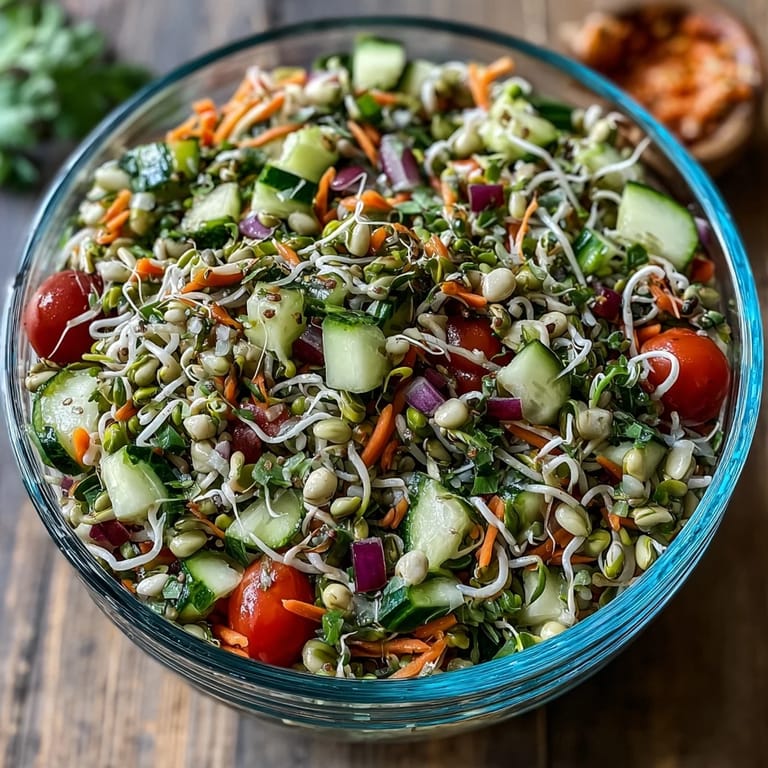
- Toss in the cucumber, tomato, bell pepper, carrot, and red onion, mixing gently so you don't bruise anything but everything mingles. The cilantro goes in last so it doesn't wilt from being buried under heavier vegetables.
- Whisk your dressing to life:
- In a separate bowl, combine the olive oil, lemon juice, sweetener if using, salt, and pepper, whisking until the whole thing becomes cohesive and slightly creamy. Taste it straight from a spoon before you put it on the salad, adjusting lemon or salt to your preference because dressing is personal.
- Dress and serve immediately:
- Pour the dressing over the salad and toss with the kind of gentleness you'd use handling something fragile, making sure the dressing coats everything without crushing the sprouts. Serve right away because the longer it sits the more the sprouts soften and the whole thing loses that living quality.
 Pin This
 There's a moment right after you dress this salad when you take the first bite and your mouth floods with the contrast of textures and temperatures all at once. That's the moment when this stops being ingredients and becomes something that feels nourishing in a way that goes beyond calories and nutrients.
When Sprouts Go Wrong and What I Learned
I once bought bulk sprouts from a farmers market without asking how long they'd been sitting, and by the time I served that salad the sprouts had developed a faint sour smell I should have caught right away. That embarrassing afternoon taught me to always inspect sprouts before buying, looking for bright color and a clean, fresh scent rather than anything earthy or sour. Now I ask vendors when they sprouted their batches and buy from the same reliable sources, because with something this simple and fresh, your ingredient quality is everything.
Variations That Keep This Interesting
The bones of this salad are strong enough to handle additions without losing its essential character. I've added sliced avocado on days when I wanted richness, switched the lemon for lime when I was feeling a different kind of brightness, and even tossed in sunflower sprouts when the radish ones weren't available. The key is respecting the original balance—if you add something creamy like avocado, maybe pull back slightly on the oil so the dressing doesn't overwhelm. Try it with roasted chickpeas for protein, or swap cilantro for dill if that's what speaks to you.
Building This Into Your Regular Rotation
This salad works as an opener to a bigger meal or as a light lunch on its own, especially if you add a grain or some protein to anchor it. I've found it pairs beautifully with grilled fish or tofu, and it's the kind of thing you can throw together on a night when you're too tired to cook but want to eat something that tastes like you tried. The real gift of mastering this recipe is realizing how much satisfaction can come from a bowl of fresh vegetables and a simple dressing.
- Keep your sprouts in a breathable container in the coldest part of your fridge, not the door where they'll get jostled and warmed.
- Make your dressing in the morning and store it separately so you can dress the salad right before eating, maintaining maximum crunch and freshness.
- Always taste your dressing on its own before committing it to the salad, because adjusting seasoning is easier than trying to fix an already-dressed bowl.
 Pin This
 This salad taught me that the best meals don't require hours at the stove or complicated technique, just attention and good ingredients treated with respect. Every time I make it I'm reminded why simplicity, when done well, is its own kind of elegance.
Recipe Questions & Answers
- → How do I prepare sprouts for salad?
Rinse all sprouts thoroughly under cold running water and drain well before combining with other vegetables. This ensures freshness and removes any debris.
- → Can I make this salad ahead of time?
For maximum freshness and crunch, serve immediately after tossing with dressing. If preparing ahead, store dressing separately and combine just before serving.
- → What can I substitute for honey in the dressing?
Maple syrup works perfectly as a vegan-friendly alternative. You can also use agave nectar or omit the sweetener entirely for a more tangy dressing.
- → How long does this salad stay fresh?
The undressed salad components can be refrigerated for up to 2 days. Once dressed, it's best enjoyed within a few hours to maintain the crisp texture of sprouts and vegetables.
- → What proteins pair well with this salad?
Grilled chicken, baked tofu, or chickpeas complement the light flavors beautifully. The salad also works alongside quinoa or as a fresh side to fish dishes.