 Pin This
 A friend once told me that the best soups aren't the ones with the longest ingredient lists, but rather the ones that taste like someone cared while making them. This spinach soup proved her right—it's remarkably simple, yet somehow manages to feel luxurious and intentional. The first time I made it on a chilly Tuesday evening, my kitchen filled with the gentle aroma of butter and garlic, and I realized I'd been overthinking soup all along. What started as a quick dinner became something I found myself craving regularly, especially when I wanted comfort without complexity.
I made this soup for my mother the week she was recovering from being under the weather, and I watched her face change as she took the first spoonful—not because of any dramatic flavor bomb, but because it was gentle and nourishing in exactly the way her body needed at that moment. She asked for seconds, which meant everything, and since then it's become the soup I instinctively reach for when someone needs quiet care delivered in a bowl.
Ingredients
- Unsalted butter (2 tablespoons): This is your flavor foundation—don't skip it or swap it for oil if you can help it, as the butter creates a subtle richness that makes the entire soup feel more complete.
- Medium onion, finely chopped: The finer you chop, the more completely it dissolves into the soup, creating a seamless base rather than distinct pieces.
- Garlic cloves, minced (2): Fresh garlic matters here; powdered garlic will taste tinny by comparison and you'll notice the difference immediately.
- Medium potato, peeled and diced: This is what gives the soup its natural creaminess without relying entirely on cream—don't skip it thinking you're saving time, because this vegetable does real work.
- Fresh spinach, roughly chopped (300 g or 10 oz): Buy it fresh and wash it yourself if possible; pre-washed spinach sometimes tastes slightly metallic, and this soup is delicate enough that you'll taste the difference.
- Vegetable stock (750 ml or 3 cups): Use good quality stock—homemade is wonderful if you have it, but a reliable store-bought brand matters more than you'd think.
- Heavy cream (120 ml or ½ cup): This final ingredient transforms the soup from nice to memorable; add it gently and don't let the heat get too aggressive or you'll risk curdling.
- Salt, black pepper, and nutmeg: The nutmeg might seem optional, but a pinch of it rounds out the flavor in a way that makes people ask what the secret ingredient is.
Tired of Takeout? 🥡
Get 10 meals you can make faster than delivery arrives. Seriously.
One email. No spam. Unsubscribe anytime.
Instructions
- Melt your butter and build your base:
- Get your large saucepan over medium heat and add the butter, letting it foam gently before you add the onion. This isn't rushing; you're creating the foundation that will flavor everything that follows, so those 3 to 4 minutes of softening the onion until it turns translucent are worth every second.
- Wake up the aromatics:
- Once your onion is soft, add the minced garlic and stir for about a minute—you're listening for that moment when the raw smell transforms into something fragrant and cooked. This brief step prevents garlic from becoming bitter, which would throw off the entire balance of your soup.
- Introduce the potato:
- Add your diced potato and let it cook for a couple of minutes, stirring occasionally so it gets coated in the buttery mixture. This allows the potato to start releasing its starch, which will eventually help thicken your soup naturally.
- Wilt the spinach:
- Add all your chopped spinach and watch as it transforms from a pile of leaves to something glossy and dark in just a few minutes of stirring. The spinach releases moisture as it cooks, which is perfectly fine—this liquid becomes part of your soup.
- Add the stock and simmer gently:
- Pour in your vegetable stock and bring everything to a boil, then reduce the heat and let it simmer quietly for 10 to 12 minutes until the potato is completely tender when pierced with a fork. You're not rushing this step; patient simmering allows flavors to meld and vegetables to soften fully.
- Blend until velvety:
- Remove from heat and use your immersion blender to purée the soup until it reaches that silky consistency where individual vegetables disappear completely. If you don't have an immersion blender, carefully transfer the soup in batches to a countertop blender, holding the lid slightly ajar to let steam escape—this prevents a dangerous pressure buildup.
- Finish with cream and seasonings:
- Return the soup to the pot if needed, then gently stir in the cream, salt, pepper, and that pinch of nutmeg, heating everything through for just 2 to 3 minutes without allowing it to boil. Boiling will cause the cream to separate, and you'll lose that beautiful, unified texture you've worked to create.
- Taste and adjust:
- Before serving, take a spoonful and truly taste it—you might find you want slightly more salt, a bit more nutmeg, or even a squeeze of brightness from lemon juice. This final adjustment step is where cooking becomes personal rather than mechanical.
 Pin This
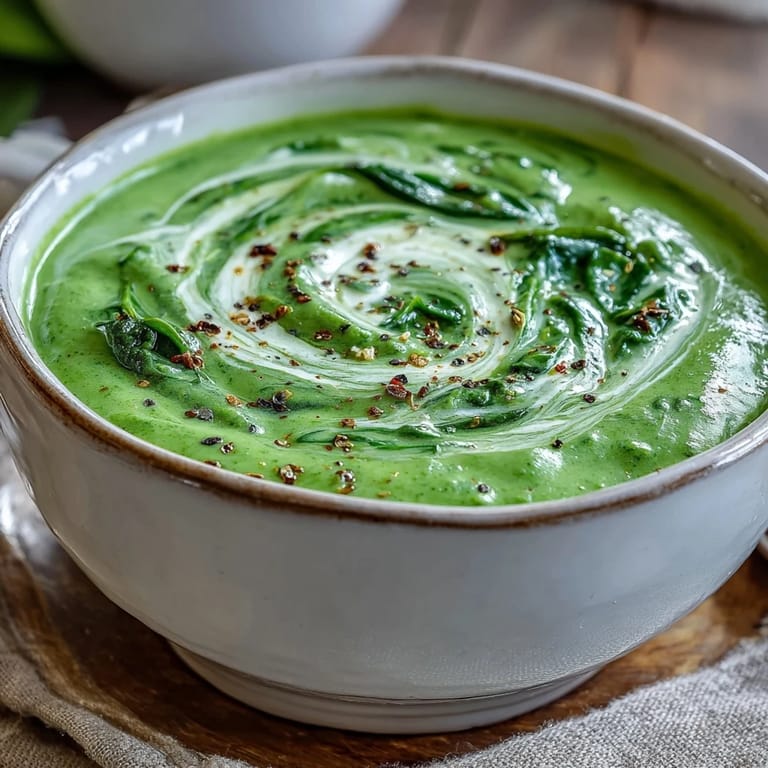
 There's a moment when you're blending this soup where it transitions from looking like broken greens in liquid to something genuinely luxurious and smooth, and that moment never gets old. It's the instant where a simple collection of vegetables becomes something that feels special enough to serve to people you care about.
Making It Your Own
Once you understand the basic structure of this soup, it becomes endlessly flexible in ways that are actually useful. I've added a handful of fresh herbs like dill or parsley right before serving, swapped in broccoli alongside the spinach on nights when I needed extra vegetables, and even stirred in a tablespoon of whole grain mustard when I wanted something with more personality. The skeleton of the recipe stays the same—butter, aromatics, potato, greens, stock, cream—but the variations let you cook what you actually have and what you're actually craving.
Vegan and Dietary Adaptations
If you're making this for people who eat plant-based or you're cooking that way yourself, the soup adapts beautifully without feeling like you're sacrificing anything. Simply replace the butter with good olive oil and use coconut cream or cashew cream instead of dairy cream—the latter made by blending soaked cashews with water creates something almost identical in richness to the original. The soup won't taste different in a bad way; it'll taste different in a way that feels intentional and honest, which is really all any adaptation needs to be.
Serving and Storage Wisdom
This soup genuinely improves when given an hour or two to sit after cooking, as the flavors continue settling into a more cohesive whole. Serve it warm in bowls with a small swirl of cream or yogurt on top if you want something visually interesting, or with crusty bread for texture and something to hold onto while eating.
- Store leftovers in an airtight container in the refrigerator for up to four days, or freeze for up to three months for those moments when you need comfort food waiting in the freezer.
- If you're reheating from frozen, thaw overnight in the refrigerator first, then warm gently over low heat, stirring occasionally so nothing scorches on the bottom.
- A squeeze of fresh lemon juice or a pinch more nutmeg can revive the flavors right before serving if you feel them fading after storage.
 Pin This
 This soup became my answer to the question of what to cook when everything feels overwhelming. It's the kind of recipe that trusts you to do simple things well rather than asking you to perform culinary acrobatics, and somehow that confidence translates into food that tastes genuinely good.
Recipe Questions & Answers
- → Can I make this spinach soup vegan?
Yes, simply replace the butter with olive oil and use coconut cream or any plant-based cream alternative instead of heavy cream for a delicious vegan version.
- → How do I make the soup extra smooth?
Use an immersion blender directly in the pot or blend in batches with a countertop blender until completely smooth. Strain through a fine-mesh sieve for an ultra-silky texture if desired.
- → Can I use frozen spinach instead of fresh?
Yes, you can use frozen spinach. Thaw and drain it well before adding to remove excess moisture. You'll need about 250-300g of frozen spinach to replace the fresh.
- → What can I serve with spinach soup?
This soup pairs beautifully with crusty bread, garlic toast, or toasted seeds sprinkled on top. A simple green salad or grilled cheese sandwich also makes an excellent accompaniment.
- → How long does spinach soup keep in the refrigerator?
Store the soup in an airtight container in the refrigerator for up to 3-4 days. Reheat gently on the stovetop over low heat, stirring occasionally. Add a splash of stock or cream if needed to adjust consistency.
- → Why add potato to spinach soup?
The potato adds body and natural creaminess to the soup while helping to thicken it. It also provides a mild, neutral base that allows the spinach flavor to shine through.